- 20 November 2026
- Important days
World Children's Day 2026: Emphasizing Children's Rights and Participation through the Theme ‘My Day, My Rights, My Future’
World
Children's Day—formerly known as Universal Children's Day—is celebrated every year
on November 20. On December 14, 1954, the United Nations General Assembly,
through Resolution 836(IX), recommended that all countries observe this day.
Its primary objective is to promote global fraternity and mutual understanding
among children, while raising awareness about their well-being, development,
and the protection of their rights.
Theme for 2026:
The theme
for World Children's Day 2026 is “My Day, My Rights, My Future.” This theme
encourages the active participation of children in decisions that affect their
lives, rights, and futures. The core message is that every child should have
access to education, healthcare, safety, play, freedom of expression, and equal
opportunities. Furthermore, children's opinions should be valued in decisions that
impact their lives.
Historical Significance of November 20:
The date of
November 20 is linked to two significant international milestones in the
history of child rights. On this day in 1959, the United Nations General
Assembly adopted the Declaration of the Rights of the Child. Subsequently, on
November 20, 1989, the United Nations Convention on the Rights of the Child
(UNCRC) was adopted. This convention serves as a key international human rights
treaty that recognizes the civil, political, economic, social, and cultural
rights of children.
United Nations Convention on the Rights of
the Child (UNCRC):
Under the
UNCRC, any person under the age of 18 is generally considered a child, unless
the age of majority is attained earlier under the relevant national law. The
convention is founded on four core principles: non-discrimination; the best
interests of the child; the right to life, survival, and development; and
respect for the views of the child. It encompasses rights related to education,
health, identity, family, protection, play, and safeguarding against
exploitation.
Constitutional and Institutional Protection
of Child Rights in India:
The
Constitution of India contains several significant provisions for the
protection and development of children. Article 21A guarantees the fundamental
right to free and compulsory education for children aged 6 to 14. Article 24
prohibits the employment of children under the age of 14 in factories, mines,
or other hazardous occupations. Articles 39(e) and 39(f) pertain to
safeguarding the health, strength, and dignified development of children.
Furthermore, the National Commission for Protection of Child Rights (NCPCR) was
established under the Commissions for Protection of Child Rights Act, 2005,
with the mandate to protect and promote child rights.
The Role of UNICEF and Global Challenges in
Child Welfare:
The United
Nations Children's Fund (UNICEF) works globally to support children's health,
nutrition, education, sanitation, and protection. On the occasion of World
Children's Day, various activities are organized to amplify children's voices,
promote child-friendly policies, and raise awareness about children's rights.
Currently, children face significant challenges, including child poverty,
malnutrition, child labor, child marriage, human trafficking, armed conflict,
digital safety concerns, and climate change. Consequently, the Sustainable
Development Goals (SDGs)—specifically Goal 1 (ending poverty), Goal 2 (ending
hunger), Goal 3 (ensuring good health), Goal 4 (providing quality education),
and Goal 16.2 (ending violence and exploitation against children)—are directly
linked to child welfare.
- 20 November 2026
- National
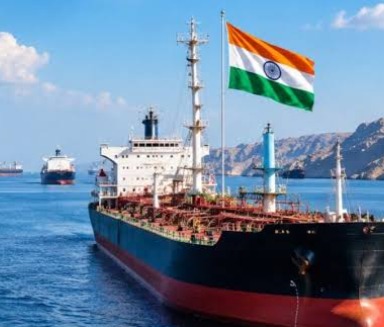
India Amends National Flag Regulations for Vessels: Red Ensign Mandated for Merchant Ships, Blue Ensign for Government Vessels
On November
9, 2026, the Union Ministry of Ports, Shipping and Waterways amended the
regulations concerning the national flags for Indian vessels, pursuant to
Section 37(1) of the Merchant Shipping Act, 2025. Under the new rules, a 'Red
Ensign' is to be flown on Indian-registered merchant vessels, while a 'Blue
Ensign' is mandated for government vessels and certain merchant vessels
designated for special use by the Ministry of Defence. The Blue Ensign must
feature the authorized emblem of the respective government department or
organization in a light-gold hue. This amendment represents a significant step
toward enhancing maritime administration, ensuring the distinct identification
of vessels, and modernizing Indian maritime law.
#Detail
News#
On November
9, 2026, the Union Ministry of Ports, Shipping and Waterways issued
notification S.O. 6115(E), amending the regulations regarding national flags
for Indian vessels. This notification has been issued under Section 37(1) of
the Merchant Shipping Act, 2025, and supersedes the previous notification, S.O.
380, dated February 9, 1961. Its objective is to designate specific national
flags for different categories of vessels and to provide clarity regarding
their identification.
Red Ensign for Indian-Registered Merchant
Vessels:
All Indian
vessels registered under the Merchant Shipping Act, 2025, are required to fly
the Red Ensign. This flag features a red background, with the Indian national
flag displayed in the upper canton (the top corner near the hoist/flagpole).
The length of the flag shall be 1.5 times its width. It is mandatory to adhere
to the proportions and design of the national flag as specified in the Flag
Code of India, 2002. This arrangement will ensure the distinct identification
of Indian-registered merchant vessels.
Blue Ensign for Government Vessels:
Except for
vessels belonging to the Indian Navy and the Indian Coast Guard, all ships
owned by the Central Government shall fly the Blue Ensign. This rule applies
regardless of whether or not the vessel is registered under the Merchant
Shipping Act. The Blue Ensign shall feature a royal blue background with the
Indian national flag in the upper canton. Additionally, it shall bear the
official badge or insignia of the relevant government department, authority, or
organization. The use of a new badge or insignia requires approval from the
Central Government; applications for this must be submitted through the
Director-General of Maritime Administration. The use of previously approved
badges or insignia may continue.
Special Provisions for Merchant Vessels
Utilized by the Ministry of Defence:
The new
notification introduces a specific category for certain Indian merchant
vessels—those that receive financial assistance (subvention) from the Ministry
of Defence and are operated exclusively for the services of the Ministry of
Defence. Such vessels are also required to fly the Blue Ensign; however, the
badge or insignia displayed thereon must be authorized by a warrant from the
Chief of the Naval Staff. Applications for such authorization must be submitted
directly to the Chief of the Naval Staff. This provision ensures a distinct
identity for merchant vessels operated specifically for the Ministry of
Defence.
Standards for the Design and Insignia of
the Blue Ensign:
According to
the notification, both the Red Ensign and the Blue Ensign shall have a length
one-and-a-half times their width, with the Indian national flag positioned in
the upper canton. The badge or insignia displayed on the Blue Ensign shall be
in a light golden color. It shall be placed at the center of the 'fly half'—the
half of the flag towards the free end. The emblem must be sized such that it
fits within a circle having a diameter equal to 13/30 of the flag's total
width. Thus, the notification establishes clear standards regarding the flag's
colors, proportions, and the placement and size of the emblem.
Section 37 and the Legal Significance for
Maritime Administration:
- 20 November 2026
- Sci - tech
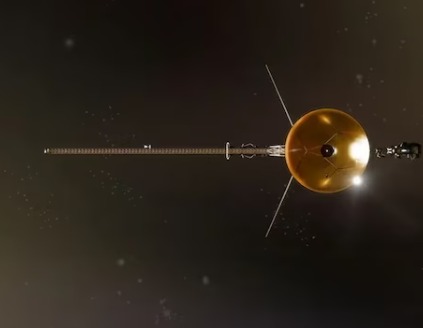
Voyager-1 Reaches a Distance of One Light-Day from Earth: A Historic Milestone for a Human-Made Object in Interstellar Space
On November
18, 2026, NASA’s Voyager-1 spacecraft became the first human-made object to
reach a distance of approximately one light-day from Earth. It was launched on
September 5, 1977, from Cape Canaveral, Florida (USA), aboard a Titan
IIIE-Centaur rocket. Its initial objective was to study the planets Jupiter and
Saturn. Currently, it is part of NASA’s Voyager Interstellar Mission and is
operated by the Jet Propulsion Laboratory (JPL).
Light-Day and Space Communication:
A
"light-day" is an astronomical unit of distance, defined as the
distance light travels in a vacuum over a period of 24 hours. The speed of
light is approximately 299,792 kilometers per second, and one light-day is
equivalent to about 25.9 billion kilometers. At this distance, it takes
approximately 24 hours for a radio signal sent from Earth to reach Voyager-1,
and another 24 hours for its response to reach Earth. Consequently, there is a
communication delay of about 48 hours between a question and its corresponding
answer.
Voyager-1 and Voyager-2 Missions:
In 1977,
NASA launched two identical spacecraft, Voyager-1 and Voyager-2, to study the
outer solar system. Voyager-2 was launched on August 20, 1977, followed by
Voyager-1 on September 5, 1977. Voyager-1 studied Jupiter and Saturn, while
Voyager-2 studied Jupiter and Saturn, as well as Uranus and Neptune. Voyager-2
is the first—and, to date, the only—spacecraft to have passed near Uranus and Neptune.
Interstellar Space, Heliosphere, and
Heliopause:
On August
25, 2012, Voyager-1 crossed the heliopause and entered interstellar space,
becoming the first human-made spacecraft to do so. The heliosphere is a vast
region created by the solar wind—a stream of particles emanating from the
Sun—and its associated magnetic influence; it provides the solar system with
partial protection against particles originating from the interstellar medium.
The heliopause marks its outer boundary, where the outward pressure of the
solar wind balances the pressure of the interstellar medium. It is important to
note that crossing the heliopause does not mean exiting the entire solar
system, which includes regions such as the Oort Cloud.
Energy Source and Long-term Operation:
Voyager-1,
which has been in operation for nearly 49 years, relies on a Radioisotope
Thermoelectric Generator (RTG) for its electrical power. This system converts
heat generated by the radioactive decay of Plutonium-238 into electrical
energy. The available electrical power from this process decreases by
approximately 4 watts each year. To conserve energy, NASA has deactivated
several non-essential instruments and heating systems, and has extended the
spacecraft's operational lifespan by reprogramming its software.
Deep Space Network and the Golden Record:
- 20 November 2026
- Sci - tech
AIIMS New Delhi Performs India’s First Open Fetal Surgery: Successful Treatment of Spina Bifida in Utero
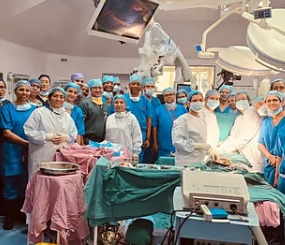
On November
12, 2026, doctors at the All India Institute of Medical Sciences (AIIMS), New
Delhi, successfully completed India’s first open fetal surgery. The procedure
was performed to treat myelomeningocele—a severe congenital spinal defect—in a
25-week-old fetus. The complex surgery, which lasted approximately six hours,
involved a team of over 30 medical experts and healthcare personnel. The
procedure utilized high-end microscopes and continuous ultrasound guidance.
Myelomeningocele and Spina Bifida:
Myelomeningocele
is the most severe form of spina bifida. This is a congenital neural tube
defect that occurs when the neural tube fails to close completely during the
early stages of fetal development. The neural tube gives rise to the brain and
the spinal cord. In this condition, a portion of the spine does not develop
properly, and the spinal cord along with its surrounding membranes may protrude
outside the body. This can lead to complications such as paralysis, weakness in
the legs, difficulties with bladder and bowel control, and hydrocephalus (an
abnormal accumulation of cerebrospinal fluid in the brain).
Need for and Procedure of Open Fetal
Surgery:
Typically,
surgery for myelomeningocele is performed after the child is born; however, in
this condition, the exposed neural tissue can sustain further damage during
pregnancy due to exposure to amniotic fluid and other factors. In open fetal
surgery, the pregnant woman’s uterus is surgically opened to repair the fetal
spinal abnormality while the fetus is still in the womb. The objective is to
protect the neural tissue from further damage and to reduce the severity of
potential neurological complications later in life.
Scientific Basis and Potential Risks:
The
effectiveness of prenatal surgery is supported by the "Management of
Myelomeningocele Study" (MOMS) conducted in the United States, which
compared surgeries performed before and after birth. The study found that
performing surgery during pregnancy can reduce the need for a shunt (to treat
hydrocephalus) and decrease the incidence of certain other neurological
complications. However, it also carries risks, such as preterm birth,
uterine-related complications, and potential risks for future pregnancies.
Therefore, this procedure is performed only on carefully selected pregnant
women, following a thorough evaluation by medical specialists.
Significance for India’s Healthcare System:
At AIIMS,
this surgery was performed through the coordination of specialists from various
fields, including neurosurgery, maternal-fetal medicine, obstetrics and
gynecology, anesthesiology, plastic surgery, radiodiagnosis, and neonatology.
The procedure was conducted free of cost under the *Janani Shishu Suraksha
Karyakram* (JSSK). This achievement marks a significant step forward for India
in the areas of advanced fetal medicine, the surgical capabilities of
government hospitals, the provision of multidisciplinary medical services, and
the expansion of accessible healthcare.
Prevention of Neural Tube Defects and the
Importance of Folic Acid:
Folic acid
(Vitamin B9) plays a crucial role in the prevention of neural tube defects.
According to the World Health Organization (WHO), women planning a pregnancy
are advised to consume 400 micrograms of folic acid daily—starting from the
time they begin planning for pregnancy and continuing through the first 12
weeks of gestation. Women with a history of a pregnancy affected by a neural
tube defect, or those with other high-risk factors, may require a higher dosage,
as determined by medical consultation. Folic acid supports the early
development of the fetal brain and spinal cord, thereby reducing the risk of
neural tube defects. For the UPSC examination, this topic is significant in the
context of human physiology, maternal and child health, nutrition, public
health, the National Health Mission, and medical technology.
- 20 November 2026
- Awards
Earthshot Prize 2026: Winners from Five Countries, Including India’s Mahindra Last Mile Mobility, Receive Global Environmental Honor
The sixth
edition of the Earthshot Prize 2026 has named five winners from Bhutan, India,
Niue, France, and Denmark. Each winner is awarded £1 million (1 million British
pounds) to further develop and expand their innovative solutions in the field
of environmental conservation. Additionally, the winners gain access to a
global network of businesses, investors, and experts.
Bhutan – Protect and Restore Nature:
Bhutan has
been honored for its efforts in conserving Himalayan forests, ecosystems, and
water sources. This initiative aims to strengthen water security for
approximately 1.6 billion people across South Asia. This initiative sets a
target to restore 50,000 sites of degraded land by 2030, which will help reduce
carbon dioxide emissions by approximately 2 million tonnes and conserve 133
billion litres of water.
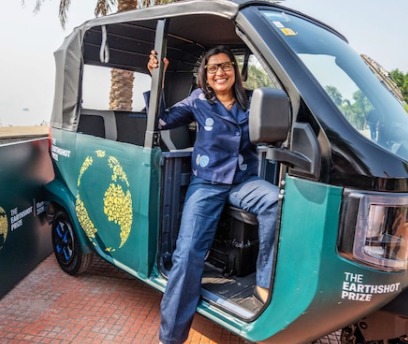
India – Mahindra Last Mile Mobility (Clean
Our Air):
India’s
Mahindra Last Mile Mobility has been recognised for its efforts to reduce urban
air pollution and promote electric vehicles, particularly electric
three-wheelers. The company has already sold over 400,000 electric rickshaws
and aims to have 1 million electric vehicles on Indian roads by 2030. This
initiative includes expanding charging infrastructure and encouraging clean
transport in cities such as Mumbai, Ahmedabad, Bengaluru, and Delhi. It is
significant in the context of India’s electric mobility and net-zero emission
goals.
Niue – Ocean Wide Trust (Revive Our
Oceans):
The Ocean
Wide Trust of the Pacific island nation of Niue has been recognised for its
work in conserving marine ecosystems and biodiversity. The primary objective of
this initiative is to ensure the effective protection of Marine Protected Areas
(MPAs) by developing a long-term financing mechanism. It aims to raise $10
million by 2028 to establish an $18 million permanent conservation fund. This
initiative will support the restoration of fisheries resources and the
preservation of marine biodiversity.
France and Denmark – Combating Chemical
Pollution and Climate Change:
France’s
‘PFAS-Free France’ initiative has been recognised in the ‘Build a Waste-Free
World’ category for its efforts to limit the use of harmful chemicals known as
PFAS. PFAS—or per- and polyfluoroalkyl substances—are a group of synthetic
chemicals often referred to as ‘forever chemicals’ because they persist in the
environment for a very long time. Meanwhile, the Danish energy company Ørsted
has been honored in the 'Fix Our Climate' category for its development of
renewable energy and offshore wind energy. The company has reduced its direct
carbon emissions by more than 98%.
Introduction and Global Significance of the
Earthshot Prize:
The
Earthshot Prize was launched in 2020 through an initiative by Britain’s Prince
William and David Attenborough. Its objective is to develop practical and
effective solutions to environmental problems by 2030. It focuses on five key
goals: protecting and restoring nature, reducing air pollution, reviving the oceans,
building a waste-free world, and fixing the climate. Each year, 15 finalists
are selected across these five categories, and one winner from each category is
awarded a prize of £1 million. For the UPSC examination, this prize is
significant in the context of the Sustainable Development Goals (SDGs), climate
change, biodiversity conservation, the circular economy, renewable energy, and
environmental governance.
- 20 November 2026
- Awards
‘Varuvaaiy’ Becomes the First Tamil Song to Be Nominated for the 2027 Grammy Awards: Global Recognition for Indian Music
‘Varuvaaiy,’
a modern adaptation of a traditional Krishna devotional song (bhajan) composed
by Subramania Bharati, has become the first Tamil song to be nominated for the
69th Grammy Awards (2027). It has been nominated in the ‘Best Global Music
Performance’ category. This milestone is significant for the international
recognition of the Tamil language and Indian classical music.
Musical Characteristics:
‘Varuvaaiy’
is a fusion of traditional Carnatic music, neo-jazz, and modern
instrumentation. It is based on the raga ‘Desh’ and draws its primary
inspiration from a Krishna devotional song by the Tamil poet Subramania
Bharati. The composition presents Indian spiritual and cultural traditions
through the lens of a modern, global musical style.
Key Artists and Contributions:
This song
was composed by Indian-American musician and singer Devan Ekambaram, and
performed by Subhiksha Rangarajan, also known as 'Susha'. Devan Ekambaram has
collaborated with A.R. Rahman and contributed his musical talent to over 500
films. Subhiksha Rangarajan is trained in both Carnatic music and jazz, having
studied the latter at the University of Toronto.
Literary and National Contributions of
Subramania Bharati:
Subramania
Bharati (1882–1921) was a renowned poet, writer, journalist, and social
reformer in Tamil literature. He is also known as 'Mahakavi Bharati'. Through
his works, he championed Indian nationalism, freedom, women's empowerment,
social equality, and opposition to caste-based discrimination. During the era
of British colonial rule, he lived in exile in Pondicherry (now Puducherry),
which was then under French administration.
Significance of the 2027 Grammy Awards:
The 69th
Grammy Awards are scheduled to be held on February 7, 2027, at the Crypto.com
Arena in Los Angeles, USA. The track 'Varuvaiya' has received a nomination in
the 'Best Global Music Performance' category, alongside other international
artists and musical collaborations. Additionally, the album 'The Mountain' by
the British band Gorillaz has been nominated in the 'Best Alternative Music
Album' category; this project features contributions from Indian artists
including Anoushka Shankar, Asha Bhosle, Ajay Prasanna, Aman Ali Khan, and
Ayaan Ali Khan.
Cultural Significance for UPSC:
- 20 November 2026
- Banking
GIFT City Becomes India’s First UNDRR MCR2030 Resilience Hub: A Significant Milestone in Disaster-Resilient Urban Development
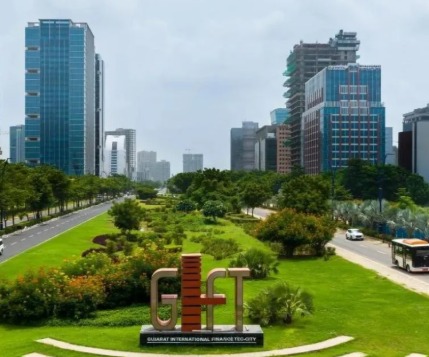
Gujarat
International Finance Tec-City (GIFT City) has been designated as India’s first
‘Making Cities Resilient 2030’ (MCR2030) Resilience Hub by the Asia-Pacific
Regional Office of the United Nations Office for Disaster Risk Reduction
(UNDRR). This achievement acknowledges GIFT City’s efforts toward disaster risk
reduction, urban resilience, and ensuring the continuity of critical
infrastructure and essential services.
About the MCR2030 Initiative:
‘Making
Cities Resilient 2030’ (MCR2030) is a global initiative led by the United
Nations Office for Disaster Risk Reduction (UNDRR), with the goal of making
cities safe, inclusive, sustainable, and disaster-resilient by 2030. Through
this initiative, local governments are supported in building urban resilience
by providing technical assistance, facilitating knowledge sharing, enhancing
capacity, and conducting disaster risk assessments.
Alignment with Global Frameworks:
The MCR2030
initiative operates in alignment with the objectives of the United Nations
Sustainable Development Goal 11 (SDG-11: Sustainable Cities and Communities),
the Sendai Framework for Disaster Risk Reduction (2015–2030), the Paris
Agreement on climate change (2015), and the New Urban Agenda. Its primary
objective is to strengthen the adaptive capacity of cities against climate
change, natural disasters, and urban risks.
Three Stages of the MCR2030 Resilience
Pathway:
The
initiative outlines three stages for making cities disaster-resilient. Stage A
focuses on fostering awareness regarding disaster risk and resilience; Stage B
involves risk assessment, strategy formulation, and the development of action
plans; and Stage C entails the implementation of these plans to bolster urban
disaster resilience. GIFT City has completed Stages A and B and is currently
working on the implementation of Stage C.
Key Achievements and Disaster Management
Measures at GIFT City:
GIFT City
joined the MCR2030 initiative in July 2022, in collaboration with the Gujarat
Institute of Disaster Management (GIDM). A comprehensive disaster resilience
scorecard was developed in June 2023, followed by the completion of a
Resilience Action Plan in March 2024. The city has conducted over 15 simulation
exercises to address scenarios such as earthquakes, fires, and other
emergencies, and has procured more than 36 types of emergency equipment.
Furthermore, information sourced from the India Meteorological Department
(IMD), the National Disaster Management Authority’s (NDMA) ‘SACHET’ warning
system, local weather stations, and other channels is utilized for early warning
and emergency response.
GIFT City and Its Institutional
Significance:
- 20 November 2026
- Sports
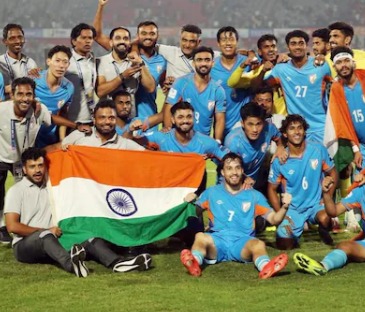
SAFF Championship 2026: India defeats Pakistan 2-1 to clinch the title for the 10th time
The final of
the 15th SAFF Championship 2026 took place on November 17, 2026, at the
National Stadium in Dhaka, the capital of Bangladesh. In this final match,
India defeated Pakistan 2-1 to claim the title. The tournament is organized by
the South Asian Football Federation (SAFF).
Match Result and Goal Scorers:
In the first
half, Pakistan’s Alamgir Ghazi scored in the 45+1st minute, giving his team a
1-0 lead. Subsequently, Suhail Ahmed Bhat equalized for India in the 60th
minute, and Sandeep Mandi scored the decisive goal in the 88th minute, securing
a 2-1 victory for India.
Turning Point of the Match:
In the 59th
minute of the contest, Pakistani player Junaid Shah was shown a red card
following a VAR (Video Assistant Referee) review for a dangerous tackle on
Indian player Bryson Fernandes. As a result, Pakistan was reduced to 10 men—an
advantage that the Indian team effectively capitalized on.
India’s Historic Achievement:
With this
victory, India secured the SAFF Championship title for the 10th time,
maintaining its supremacy in the tournament. Furthermore, India became the
first team to win the SAFF Championship three consecutive times. This
achievement underscores India’s sustained dominance in South Asian football.
Pakistan’s Performance:
Pakistan
reached the SAFF Championship final for the first time. However, following
their defeat to India in the final, they had to settle for the runner-up
position. This match also marked the first-ever final encounter between India
and Pakistan in the history of the SAFF Championship.
Key Facts about SAFF: